
Bury Cabinet votes on 2 December on a town centre plan for more than 1,000 homes. Its study found up to 3,820 parking spaces sitting empty on weekdays.
Bury Council’s Cabinet will decide on Wednesday 2 December whether to approve a new plan for the next ten years of work in the town centre. It covers the Interchange, the Mill Gate, Bury Market, Pyramid Park and the land south of the market. More than 1,000 new homes are expected across the town centre over time.
The council announced the vote in a press release on 25 November. The Cabinet report and the full framework are published with the agenda for the meeting.
What the plan is, and what it is not
The document is called the Bury Town Centre Phase 1 Delivery Framework. It builds on the 2022 Town Centre Masterplan. Consultants MCAU and AECOM drew it up.
The report says approving it would not grant planning permission or commit any money. Every project would still need its own consultation, planning application and funding decision. Unlike the 2022 masterplan, it would not count as a material consideration when planning applications are decided.
The areas it covers
The “Phase 1” area takes in:
- Bury Interchange: the TfGM rebuild of the bus and Metrolink station, with a new footbridge to Pyramid Park
- The Mill Gate: Bruntwood’s plans with the council, including a new Market Square and the demolition of Princess Parade, backed by £24.2m of Good Growth money
- Bury Market: Casewells, the new canopies and the £10m from the government to secure the Indoor Market
- Pyramid Park and Q-Park: 138 homes at Pyramid Park and 77 at Q-Park
- SOMA and Humphrey House: land south of the market, with 75 to 150 or more homes in a first phase and 500 or more in the longer term
The Pyramid Park homes and the £10m for the Indoor Market were announced earlier this year.
The four aims
If approved, the framework would steer work towards four “strategic moves”:
- Destination: make the market, Casewells, Kay Gardens and the Mill Gate work as one Market Quarter
- Reconnect: make walking, cycling and public transport routes safer and clearer, and tackle Angouleme Way
- Grow: build homes that suit Bury’s character and bring more people into the centre
- Energy Ready: plan power, water and low-carbon heat for all the big schemes at once
Angouleme Way
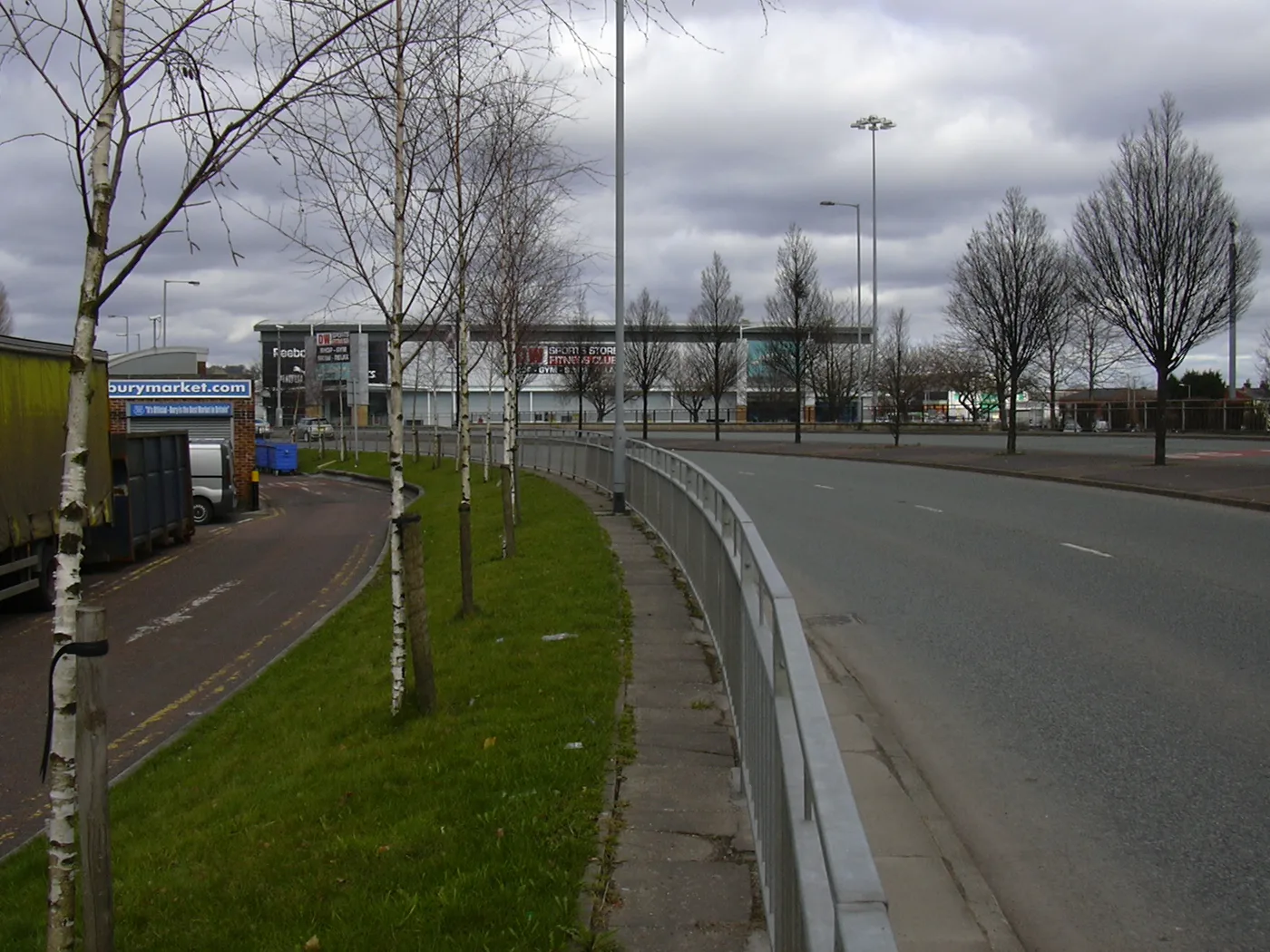
The framework is blunt about the dual carriageway on the south side of the centre. It says Angouleme Way “creates a significant physical and environmental barrier”. It adds that walking between Bury Market, the Interchange and Pyramid Park is “poor, disorientating and unintuitive”.
It also says the existing crossings and subways do not give a consistently safe experience. The ten-year aim is to turn the road “from a barrier into a connected, people-focused corridor”. The report gives no design or cost for that yet.
The car parking finding
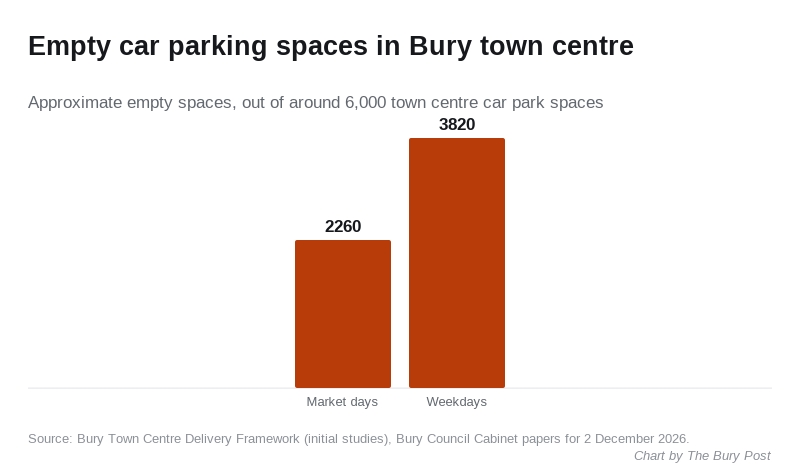
The framework includes an early review of parking. It says there are potentially around 6,000 car park spaces in the town centre, plus about 1,000 on-street spaces.
Its initial studies found:
- about 2,260 spaces empty on market days, a surplus of around 38%
- about 3,820 spaces empty on weekdays, a surplus of around 64%
The framework adds that this is “despite parking pressures in popular areas”. It says some “rebalancing and better utilisation” may help free land for development. One of the first-year actions is to commission a town centre car parking strategy.
This is separate from the council’s consultation on charging at 22 free car parks across the borough, which is still open.
What would happen first
The report lists the work planned for the first year:
- a “Brand Bury” identity, with better signs, wayfinding and events
- plans for the future of the Indoor Market
- a movement strategy covering Angouleme Way, crossings and subways
- progress on the Interchange, Pyramid Park and Q-Park, and SOMA
- the car parking strategy
- a programme for power, water and heat networks
- talks with the NHS about health services on the high street
Within three years, it aims to support the opening of the new Market Square and improve routes between the market, the Interchange, the Mill Gate and The Rock.
What the council says
Councillor Charlotte Morris, Cabinet Member for Regeneration and Growth, said: “Every project should help make the town centre work better for the people who use it.”
The council’s release says Bury Market draws around 150,000 visitors a week. The Mill Gate records around 12 million visits a year.
What it means for you
- The Mill Gate consultation closes on Sunday 29 November. It covers the new square and the first phase of the shopping centre’s redevelopment. You can respond at futuremillgatebury.co.uk.
- The Cabinet meeting is at 6pm on Wednesday 2 December. The papers are on the council’s meetings page.
- Nothing in the framework is a planning application. The report says its drawings are “indicative only”. Each scheme will have its own consultation before anything is built.
Have your say