
2,052 households are on Bury's housing register. 415 need three bedrooms, yet only 35 three-bed homes were advertised all year. Waits, bands and how to bid.
2,052 households were waiting for a council or housing association home in Bury at the end of March. Families who need three bedrooms had already waited an average of 754 days, just over two years.
Over the whole of 2025/26, only 35 three-bedroom homes were advertised for them to bid on. At the year end, 415 households on the list needed one.
The figures are in a report to the council’s Cabinet on Wednesday 14 October. Cabinet was asked to make two changes to the rules on who gets a home. The council’s decision register now shows them as approved, subject to call-in. Call-in lets scrutiny councillors ask for a decision to be looked at again before it takes effect.
How long people have waited
The report breaks the register down by the size of home each household needs. The waiting times are averages of how long people on the list at 31 March had been waiting so far, not how long it took those who were housed.
| Home needed | Households waiting | Average wait so far |
|---|---|---|
| One bedroom | 1,040 | 449 days |
| Two bedrooms | 517 | 624 days |
| Three bedrooms | 415 | 754 days |
| Four bedrooms | 72 | 693 days |
| More than four | 14 | 1,199 days |
| Total | 2,052 |
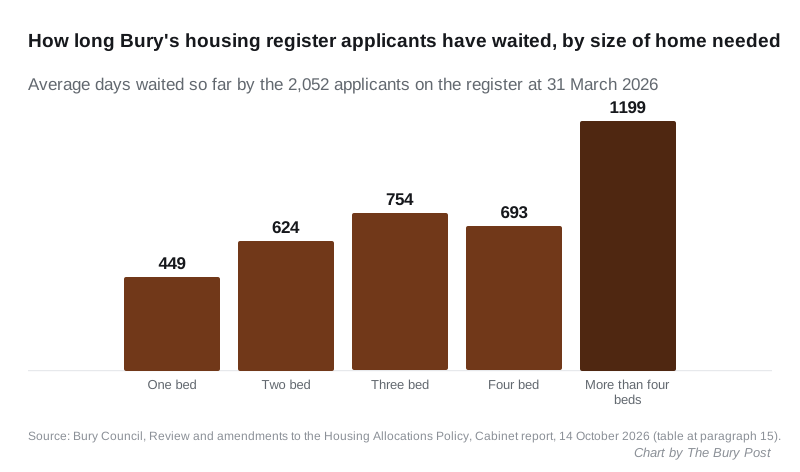
The 14 households needing more than four bedrooms had waited longest: 1,199 days on average, more than three years.
How many homes came up
The council let 567 homes in 2025/26, its own and those of housing associations where it nominates the tenant. Most go through Bury’s choice based lettings scheme, where people on the list bid. The report says 429 were advertised that way:
| Size | Advertised in 2025/26 | Households waiting at 31 March |
|---|---|---|
| One bedroom | 223 | 1,040 |
| Two bedrooms | 171 | 517 |
| Three bedrooms | 35 | 415 |
| Four bedrooms | 0 | 72 |
| More than four | 0 | 14 |
No four-bedroom or larger home was advertised all year. The list is not a single queue, and people join and leave it through the year, so the two columns are not a straight ratio. They do show where the shortage bites hardest: family homes.
The other 138 lets were direct lets, where the council offers a home without bidding. They made up 24% of all lets. The report gives the reasons:
- 57 to homeless applicants
- 45 managed moves
- 36 to care leavers
Of the direct lets, 95 went to people in Band 1, the most urgent. Across all lets, 36% went to Band 1.
Who comes first: the five bands
Every household on the register is put in a band. Within a band, homes go to whoever has waited longest. The allocations policy sets them out, and the report gives how many were in each at 31 March:
| Band | What it covers (examples) | Households |
|---|---|---|
| 1, urgent need | Homeless and in priority need, life-threatening circumstances such as domestic abuse, urgent medical need, care leavers, armed forces | 347 |
| 2, high need | Statutory overcrowding, a serious hazard in the home, leaving supported housing, moving to take a job in Bury | 470 |
| 3, medium need | Homeless but not in priority need, facing eviction through no fault of your own, two bedrooms short | 625 |
| 4, low need | One bedroom short, over-55s living upstairs with no lift | 418 |
| 5, assessment | Awaiting a homelessness decision, no local connection, refused a suitable offer | 192 |
Band 3 is the largest. Three in five households on the register, 1,235 households, are in Bands 3 to 5.
What Cabinet changed
The report calls both changes minor. It says they do not change anyone’s priority, so the law does not require a consultation.
- Retiring council workers in tied homes. Some council staff, such as caretakers and park wardens, live in a home that comes with the job. They lose it when they retire. The policy had no route for them, so they risked becoming homeless. They can now be offered a council tenancy directly when they retire.
- Wider power to make direct lets. The Director of Housing could only make direct lets in a set list of situations. The change lets her do so “in other similar circumstances” at her discretion. The policy still says direct lets will remain “a fraction of the total lettings”.
The report says there are no financial implications.
The council’s own website is behind
Bury Council’s housing register page says that “as of March 2026” there were 2,067 households waiting. Those are the figures its housing demand page gives for January 2026. The website also puts the wait for five or more bedrooms at 740 days, against the 1,199 days in the Cabinet report for 31 March.
The January page has the wider picture. That month 231 households were in temporary accommodation, including 177 families with 439 children.
What it means for you
- Join the register online. Applications go through the council’s Housing Register page, which checks eligibility first. You will need two pieces of evidence, of your identity and your address. Help is available from the Housing Options Service if you cannot apply online.
- Bid every week. Homes are advertised for a week, updated every Wednesday, with bids closing at 5pm the following Tuesday. Only the successful bidder is told.
- Do not let it lapse. The policy says not bidding for six months can get you removed. If the council asks you to renew, you have 14 days.
- Tell them when things change. A new medical condition, a baby or someone moving in can change your band.
- Do not bid on a home you do not want. Refusing a suitable offer can drop you to Band 5 or off the list.
The council’s housing strategy consultation covers how many affordable homes the borough plans to build. Bury Council is also working through a £9.6m budget gap for next year.
Have your say